We are proud to feature books authored by members of the Idyllwild Community Church.
The Giant David Could Not Kill
by Dr. Robert Mitchell
 It has often been said that relationships are one of the most important aspects of life, and King David's story is a testament to this truth. As an unforgettable figure in the Bible, David is renowned for writing the Psalms, becoming the most influential worship leader, conquering armies, and being a formidable giant. Yet, in an interesting look at David's journey,
In The Giant David Could Not Kill, author Bob Mitchell reveals the tasks that David could not do alone and the lessons we can learn from them, as they are the moments in which relationships play a key role in David's life. Mitchell's groundbreaking work offers a fresh retelling of the story of David, showcasing a broader perspective of not only the principles and truths within David's life but also the people who helped David grow into the man of anointing and maturity that would serve a grand purpose in God's eternal plan.
When David was about to face a second giant, whom he could not defeat on his own, his nephew intervened to preserve David's life and the impact his life would have on future generations of believers. David formed relationships with people from every walk of life, from princes to paupers, lawbreakers to lawmakers, and poets to prophets.
As you begin to understand David's personal interactions, you'll discover valuable lessons in the fine art of relating both to God and to people with love and what can be gained from these relationships. Mitchell's profound insight will encourage you to practice applicable methods of developing relationships straight from David's experiences that can enhance your spiritual walk.
Uncover the impact of cultivating a relational circle that is wide as well as deep and recognize the importance of making connections with various kinds of people. Just like David, you will be encouraged to invest more time in your relationships with those whom God has placed in your path. If you are desiring wisdom from Scripture about how to relate better to others and grow together in Christ with those around you, The Giant David Could Not Kill will inspire you to allow the Holy Spirit to open your heart to the power of Christ-centered relationships.
 About the Author
Bob attended Fuller Seminary in Pasadena, California where he earned a Masters in Divinity (MDiv)–Fuller’s flagship degree program with foundational courses in Bible, theology, history, missiology, psychology, and practical theology. This was followed by a Doctor of Ministry (DMin) degree which provided advanced training in the nature and purposes of ministry and Christian discipleship. After graduation, Bob pastored a church in rural Tennessee for nine years use where he used his passion and love of people to grow God’s kingdom. This was followed by a calling to be the Senior Pastor of a church in California, for 27 years.
The book is available at Amazon.com.
Which god is God?
by Adrian J. Adams, Esq.
 In a unique exploration of world religions, author and lawyer Adrian Adams utilizes the rules of legal evidence to evaluate religious claims in his new book, “Which God is God?: A Lawyer’s Look at God and Religion.” The book investigates the core beliefs of Hinduism, Buddhism, Taoism, Islam, Judaism, Christianity, and the New Age Movement, seeking to establish which religious doctrines are credible.
Acknowledging that each religion has a different view of what God is, Adams seeks the answers to questions such as, “Is God real or an illusion?,” “Are there multiple Gods?,” “Do we experience karma and reincarnation or karma?,” “Can we communicate with spirits?,” and more.
“The idea behind the book came to me when a law partner and I discussed the existence of God and who he is,” Adams explained. “As we talked it over I realized that, as lawyers, we have a unique perspective and process for determining what is true and false. A religion that survives legal scrutiny can rightfully claim to know our purpose on earth and the pathway to our ultimate destination”
“Which God is God,” is structured into three different sections, in which he applies legal methods to scrutinize religious claims, encouraging readers to consider evidence, logic, and the rules of evidence to determine the truth about God’s identity and the nature of the afterlife.
Part One begins with the age-old question, “Does God exist?” It examines scientific and philosophical arguments, referencing modern discoveries in physics, cosmology, and thermodynamics, arguing that the universe’s creation and order point to the existence of a higher intelligence.
Part two dives into the conflicting claims of different religions, outlining key beliefs about the afterlife and the nature of God across major faiths. Adams underscores that these religions cannot all be true simultaneously, as they make mutually exclusive claims.
The final part evaluates Christianity’s claim that Jesus is the Son of God, focusing on the credibility of the Gospels and Jesus’ fulfillment of Old Testament prophecies. It examines the miracles, resurrection, and unique aspects of Jesus’ life that align with prophecies, concluding that Christianity offers the most verifiable and compelling path to understanding God.
 About the Author
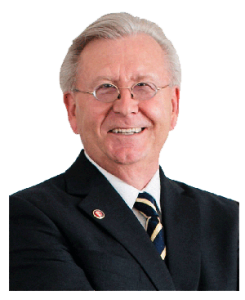
Adrian served in the Marine Corps in aviation electronics on the F-4 Phantoms. After completing his service, Adrian went on to earn a degree in psychology, with minors in chemistry and biology. He then earned an MBA from the University of California at Los Angeles (UCLA) and a law degree from Southwestern Law School. Adrian established a boutique law firm with 22 attorneys that specializes in corporate counsel to boards of directors of common interest developments. In addition, he served as President of two nonprofit organizations.
The book is available at Amazon.com.
Sheltered in the Rock
by Margaret Lattin

Seeking refuge during the Second World War takes a young widow and her two children on a journey from one dangerous situation to another. Leaving Warsaw, Poland, on the last available train, the family heads to Germany.
Fleeing invading armies and heavy bombing, they cross the border into Switzerland, England and they finally find a home in the U.S.A. The author and her husband live in Idyllwild, CA.
A true in depth look at WW2 from the perspective of a widow and her two children fleeing the violence of war in search of peace and freedom. -I. D.
WELL WRITTEN AND BEAUTIFUL TRUE STORY. -Linda E.
Wow, what an exciting story of Margaret and Paul, and their mother Martha! Page one had Paul, at age 9, crawling under barbed wire some 70 years ago. Paul has been a personal friend for well over 20 years, and now I am amazed learning new facts about how God protected Paul and his family through World War II and beyond even though his family were refugees and displaced persons. I finished the book in 2 days. True inspiring life stories are hard to find. Allyn H.
This is a great book. Easy reading and a good story. Should be widely read, -Paul T.
Having lived in developing countries, this book brought back the memories of fellowship and the essential goodness of people helping one another in desperate times. Not only is it a story of faith spanning six decades, but also Margaret Lattin is a keen observer of the beauty and wonder of the natural world. Her narrative moves from character to character, and her/their resilience, faith in people and optimism makes this book well worth a read. -F.
 About the Author
Living in Warsaw Poland during World War II, Margaret came to Wisconsin as a high school student. She attended the University of Wisconsin and on graduating taught English and French in high school. After eighteen years in Paraguay South America, she lived in California.
The book is available at Amazon.com.